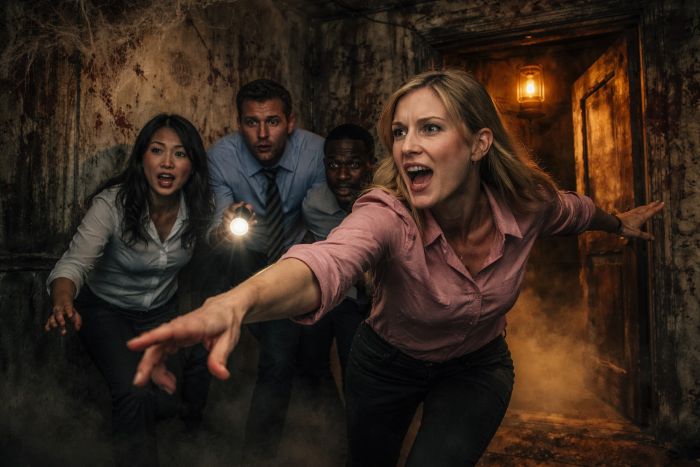
Escape rooms are more than entertainment. They can serve as real-time simulations of how teams communicate, solve problems, manage stress, and respond to uncertainty, making them an engaging option for group team building. In a horror escape room, these dynamics become even more visible as heightened pressure, limited time, and immersive environments encourage participants to rely on one another and work together toward a common goal.
For companies in Dubai using escape rooms as a team activity, the experience often reveals patterns that mirror everyday workplace behavior. How a team approaches puzzles, conflict, leadership, and collaboration inside the room provides valuable insight into how they operate outside of it.
This article explores what common escape room behaviors reveal about a team’s work style and how organizations can use these insights to improve performance.
Communication Style Under Pressure
One of the clearest indicators of team work style in a horror escape room is communication.
What You Might See
- Some teams communicate openly, sharing every clue and idea.
- Others speak selectively or work silently.
- In certain groups, one or two voices dominate while others withdraw.
What It Reveals at Work
Teams that communicate clearly and consistently in escape rooms tend to:
- Share information freely in the workplace
- Collaborate across roles and departments
- Resolve misunderstandings quickly
Teams that struggle to communicate under pressure often reflect:
- Siloed workflows
- Hesitation to speak up in meetings
- Overreliance on a few individuals for decisions
The intensity of a horror escape room magnifies communication habits that already exist.
Leadership Patterns and Decision Making
Escape rooms naturally surface leadership behavior, even when no leader is officially assigned.
What You Might See
- One person taking control immediately
- Leadership shifting depending on the puzzle
- A lack of direction with everyone working independently
What It Reveals at Work
A dominant leader in the room may reflect:
- A top down management style
- Strong decision making but limited delegation
Shared or rotating leadership often indicates:
- Collaborative leadership cultures
- High trust among team members
- Flexibility in roles and responsibilities
A lack of leadership usually signals:
- Unclear accountability
- Decision paralysis
- Teams waiting for direction rather than acting
In a horror escape room, leadership becomes visible because time pressure forces teams to act rather than debate endlessly.
Problem Solving Approach
How teams tackle puzzles offers insight into how they approach challenges at work and in corporate experiences Dubai. What you observe during gameplay often mirrors real workplace behavior.
What You Might See
- Teams methodically testing ideas
- Teams rushing through without validating solutions
- Teams overthinking simple puzzles
What It Reveals at Work
Structured problem solvers in escape rooms often:
- Break complex problems into manageable steps
- Use data and logic before acting
- Stay calm under pressure
Teams that rush may reflect:
- A bias toward speed over accuracy
- Reactive decision making
- A tendency to fix problems quickly without full analysis
Teams that overanalyze may:
- Struggle with agility
- Delay decisions due to fear of mistakes
- Miss opportunities by seeking perfection
The horror escape room environment highlights how teams balance speed, logic, and creativity.
Adaptability to Change
Escape rooms constantly introduce new information. Locked doors open, storylines shift, and assumptions are challenged, making them a popular form of Dubai entertainment for corporate groups.
What You Might See
- Teams adjusting strategies quickly
- Teams clinging to initial assumptions
- Frustration when plans no longer work
What It Reveals at Work
Adaptable teams tend to:
- Embrace change in projects
- Pivot strategies when needed
- Stay productive during uncertainty
Teams resistant to change may:
- Struggle during organizational shifts
- Rely too heavily on rigid processes
- Become disengaged when plans evolve
A horror escape room tests adaptability because it forces teams to abandon failed approaches and try new ones under time pressure.
Trust and Collaboration Levels
Trust is essential in escape rooms. Teams must rely on each other’s observations and decisions.
What You Might See
- Team members trusting shared information
- Individuals double checking everything themselves
- Conflict when opinions differ
What It Reveals at Work
High trust teams often:
- Delegate effectively
- Support one another during challenges
- Resolve disagreements constructively
Low trust behaviors can indicate:
- Micromanagement tendencies
- Fear of mistakes
- Poor collaboration between roles or departments
The confined setting of a horror escape room makes trust issues impossible to hide.
Stress Management and Emotional Control
Fear and urgency are built into horror escape rooms, making emotional responses a key indicator of work style.
What You Might See
- Teams staying calm despite scares
- Panic leading to rushed decisions
- Tension or blame during setbacks
What It Reveals at Work
Teams that manage stress well in escape rooms often:
- Perform consistently under deadlines
- Communicate calmly during crises
- Support each other emotionally
Teams that struggle with stress may:
- Experience burnout
- Handle conflict poorly
- Lose productivity during high pressure periods
Emotional intelligence becomes highly visible in horror themed environments.
Role Clarity and Accountability
Escape rooms expose how teams handle responsibility.
What You Might See
- Clear division of tasks
- Everyone doing everything
- Certain people disengaging
What It Reveals at Work
Clear role distribution suggests:
- Strong project management habits
- Accountability and ownership
- Efficient use of individual strengths
Lack of role clarity may reflect:
- Overlapping responsibilities
- Confusion in workflows
- Uneven workload distribution
A horror escape room forces teams to confront inefficiencies quickly.
Learning Orientation and Feedback Response
Escape rooms provide constant feedback. A lock opens or it does not.
What You Might See
- Teams learning quickly from mistakes
- Teams repeating the same errors
- Defensiveness when ideas fail
What It Reveals at Work
Learning oriented teams tend to:
- Embrace feedback
- Improve processes continuously
- Encourage experimentation
Defensive teams may:
- Resist change
- Avoid accountability
- Repeat inefficiencies
The immediate feedback loop in escape rooms mirrors real world performance metrics.
Using Escape Room Insights for Team Development
The true value of a horror escape room lies in reflection after the experience.
Teams can ask:
- How did we communicate under pressure?
- Who stepped into leadership roles?
- Where did we lose time or focus?
- How did we handle fear and stress?
These insights help organizations improve:
- Team communication
- Leadership development
- Workflow efficiency
- Stress management strategies
Final Thoughts
A horror escape room is a powerful mirror of workplace behavior. It reveals how teams communicate, lead, solve problems, and manage pressure when the stakes feel real.
For companies in Dubai seeking meaningful team experiences, escape rooms offer more than entertainment. They provide clear, actionable insight into team work styles and dynamics, especially when you book teams horror escape room.
By paying attention to performance inside the room, organizations gain valuable understanding that can strengthen collaboration, productivity, and long term team success.