Trying an escape room for the first time can feel exciting and overwhelming at the same time. The countdown timer, immersive environment, and pressure to solve puzzles quickly can make beginners wonder how to stay calm and perform well. Understanding how long an escape room game is, what to expect, and how to apply practical escape room tips and strategies can help you approach the experience with confidence.
Escape rooms are designed to challenge teams through puzzles, hidden clues, and collaborative problem solving within a limited timeframe. Many players assume they need special skills or prior experience, but the reality is that success often comes down to communication, organization, and staying composed under pressure.
This guide covers essential escape room tips for beginners, how long an escape room game typically lasts, and strategies to help your team stay calm, work efficiently, and improve your chances of completing the mission.

How Long Is an Escape Room Game for Beginners?
Before diving into strategies, it helps to understand how long is an escape room game. Most escape room experiences are built around a fixed timer, typically about 60 minutes of gameplay. This time limit creates urgency and encourages teams to work together efficiently.
However, the full experience usually lasts longer. From arrival to completion, most visits include:
- Check-in and preparation
- Game briefing and instructions
- Gameplay with countdown timer
- Post-game discussion
This means the total time commitment is often around 75 to 90 minutes depending on the experience.
Knowing how long an escape room game lasts helps beginners manage expectations and avoid panic. The time limit is designed to be challenging but achievable, especially when teams communicate and stay organized.
Why Beginners Often Panic in Escape Rooms
First-time players sometimes feel overwhelmed because escape rooms combine multiple elements at once:
- Countdown timer
- Dim lighting or themed environments
- Multiple puzzles
- Team communication
- Hidden clues
- Pressure to succeed
These factors can create urgency, especially in immersive environments. However, the best approach is to slow down mentally, stay organized, and follow a structured strategy.
Remember that escape rooms are designed for fun and collaboration. Staying calm often leads to better problem solving.
Escape Room Tips and Strategies to Stay Calm
These beginner-friendly escape room tips and strategies help reduce stress and improve team performance.
Start With a Quick Room Scan
When the game begins, avoid rushing into the first puzzle you see. Instead, take a moment to scan the room. Look for:
- Locked boxes
- Numbers or symbols
- Hidden compartments
- Objects that stand out
- Written clues
This quick overview helps your team understand the environment and plan efficiently.
Communicate Everything You Find
One of the most important escape room tips is constant communication. Share clues immediately, even if they seem small. Many puzzles require combining multiple pieces of information.
Examples:
- Found numbers
- Symbols
- Keys
- Notes
- Patterns
Communication prevents duplicate work and keeps everyone aligned.
Divide and Conquer
Instead of everyone working on one puzzle, split into smaller groups. This allows your team to solve multiple challenges at once.
For example:
- One group searches for clues
- One group works on locks
- One person organizes items
- One person tracks progress
This approach improves efficiency and reduces pressure.
Keep Solved and Unsolved Items Separate
Organization is critical in escape rooms. Create two areas:
- Solved items pile
- Active clues pile
This prevents confusion and helps your team stay focused.
Use Hints Strategically
Many beginners hesitate to ask for hints. However, hints are part of the experience. If your team is stuck for several minutes, using a hint can keep momentum.
This is especially helpful when learning how long is an escape room game, since time moves quickly.
Understanding the Escape Room Time Pressure
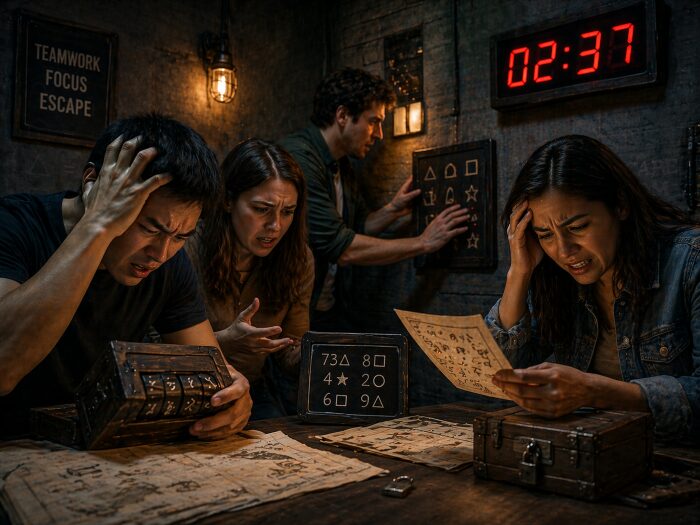
The countdown timer is designed to create excitement, not panic. Most rooms give players enough time to solve puzzles if they:
- Communicate
- Stay organized
- Divide tasks
- Avoid overthinking
Even experienced teams sometimes finish close to the end. The timer is part of the challenge.
How to Work Better as a Team
Escape rooms are collaborative experiences. Strong teamwork improves performance significantly.
Assign Roles
Roles help teams stay structured:
- Searcher
- Puzzle solver
- Organizer
- Communicator
- Time watcher
Assigning roles early helps reduce chaos.
Think Out Loud
Verbalizing ideas helps teammates connect clues. Even incorrect ideas can lead to breakthroughs.
Share Completed Tasks
Let teammates know when something is solved. This prevents rechecking the same puzzle.
Common Mistakes Beginners Should Avoid
Avoiding these mistakes helps reduce stress.
Working silently
Ignoring obvious clues
Overthinking simple puzzles
Holding onto clues too long
Not asking for hints
Crowding one puzzle
Rushing without searching
These mistakes can slow progress.
How Horror Escape Rooms Affect First-Time Players
Horror-themed escape rooms add atmosphere and tension through lighting, sound, and immersive environments. This can make beginners more anxious, especially under time pressure.
To stay calm:
- Focus on puzzles
- Stay with teammates
- Communicate clearly
- Ignore distractions
- Follow the storyline
Immersive environments are designed to enhance the experience, but teamwork and focus remain the keys to success.
Escape Room Tips for Corporate Teams and Group Events
Escape rooms are popular for team building because they encourage:
- Collaboration
- Communication
- Leadership
- Problem solving
- Time management
For corporate teams, staying calm is especially important. Teams should:
- Encourage participation
- Share ideas openly
- Rotate roles
- Support teammates
This creates a positive group experience.
How to Manage Time Effectively
Understanding how long is an escape room game helps teams manage pacing.
First 10 Minutes
Search thoroughly and gather clues.
Middle Phase
Solve puzzles and unlock progressions.
Final Minutes
Focus on remaining puzzles and use hints if needed.
Breaking the game into phases helps reduce panic.
What to Do If Your Team Gets Stuck
Getting stuck is normal. When it happens:
- Recheck solved clues
- Share findings
- Switch puzzles
- Ask for hint
- Reorganize clues
Changing perspective often helps.
Why Staying Calm Helps You Solve Faster
Stress reduces problem solving ability. Calm teams:
- Communicate better
- Think logically
- Stay organized
- Solve puzzles faster
Taking a moment to reset can improve performance.
What Beginners Should Expect From Their First Escape Room
First-time players typically experience:
- Story introduction
- Immersive environment
- Team-based puzzles
- Countdown timer
- Hint support
- Final outcome
Understanding this flow helps reduce anxiety.
How Many Players Is Best for Beginners?
Small teams often perform better. This allows:
- Clear communication
- Less crowding
- Better organization
- More participation
Larger groups can also succeed with proper coordination.
Should Beginners Try Difficult Rooms?
Beginner-friendly rooms are recommended first. These:
- Introduce mechanics
- Provide logical puzzles
- Offer guidance
- Reduce frustration
After gaining experience, players can try advanced rooms.
How long is an escape room game?
Most escape room games last about 60 minutes. For an Insidious escape room, the experience may also include check-in, a briefing, and a short wrap-up, bringing the total time to around 75 to 90 minutes.
Are escape rooms scary for beginners?
Some escape rooms use immersive environments, lighting, and sound to create atmosphere. However, the experience focuses on puzzles and teamwork rather than fear.
What are the best escape room tips for beginners?
Communicate clearly, search thoroughly, divide tasks, stay organized, and use hints when needed. These strategies help teams stay calm and solve puzzles efficiently.
Can beginners beat an escape room?
Yes. Escape rooms are designed for all experience levels. Teams that communicate and stay organized often perform well.
How many people should be on a team?
Small to medium groups typically work well. This allows everyone to participate and communicate effectively.
What should I bring to an escape room?
Comfortable clothing and a collaborative mindset. No special skills are required.
Do escape rooms give hints?
Most escape rooms provide hints to help teams progress. Using hints is part of the experience.
Final Thoughts
Escape rooms are designed to challenge teams while encouraging collaboration and problem-solving. For groups taking on a horror challenge Dubai, understanding how long is an escape room game, staying organized, and following proven escape room tips and strategies can help beginners enjoy the experience without panicking.
By communicating clearly, dividing tasks, and focusing on clues, first-time players can stay calm and improve their chances of completing the mission. Whether visiting with friends, colleagues, or family, the key to success is teamwork, patience, and enjoying the immersive experience.